Memory Game Rewards, Mastered: Skill Arena’s Memory Mode Mechanics, Timing, and Tournament Flow
Memory Game Rewards, Mastered: Skill Arena’s Memory Mode Mechanics, Timing, and Tournament Flow
Looking for a real breakdown of memory game rewards that starts with gameplay, not hype? This deep dive unpacks how Skill Arena’s Memory Mode is built for skill: precise mechanics, sharp timing, clean scoring, and a fair tournament structure that ranks the best performers. Play well, place well—and in eligible events you can convert high ranks into gift card rewards without any fluff.
Memory Mode Format: Mechanics, Timing, and Action Flow
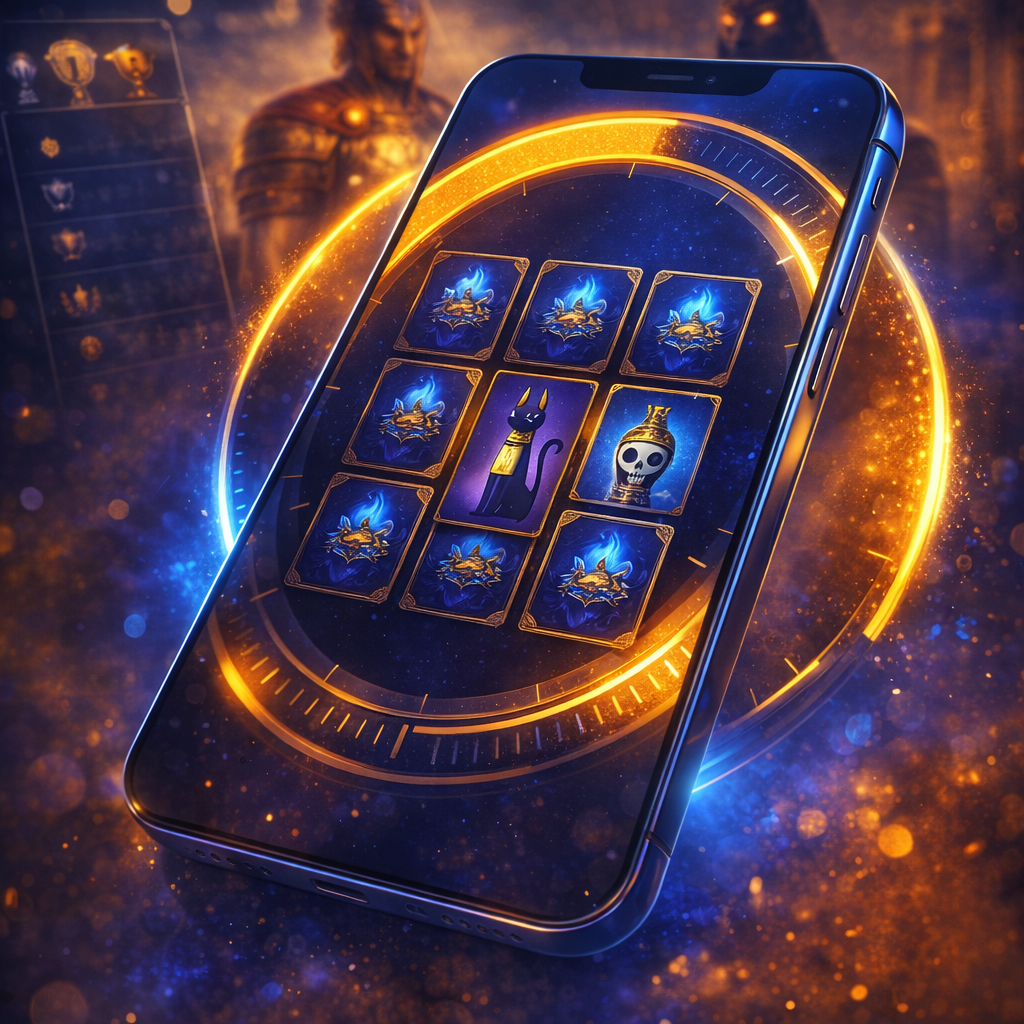
Skill Arena is a skill-based competitive mobile game. Memory Mode is engineered around recall under pressure, pairing accuracy with time-to-confirm. Each match is a clean loop:
- Preview: Tiles or positions briefly reveal a pattern.
- Conceal: The board hides, and the clock starts.
- Confirm: Recreate the pattern—pair by pair or step by step.
- Resolve: Score tallies on accuracy first, then timing.
The action flow deliberately minimizes randomness. Inputs are deterministic. Patterns are seeded so players in the same bracket face the same challenge under identical conditions. That keeps competition fair while rewarding mastery of three core skills:
- Recall: Chunk, associate, and store short-term sequences.
- Spatial mapping: Anchor positions relative to the grid’s landmarks.
- Timing discipline: Commit decisively to avoid hesitation penalties.
Every tile tap and pause matters. Over-tap, and you invite penalties. Rush, and you risk misses. The optimal run is clean, confident, and fast—exactly what Memory Mode is designed to surface.
Scoring Model: Accuracy, Speed, and Consistency
The scoring model is transparent:
- Accuracy anchors the base. Fewer mistakes beat marginal speed gains.
- Timing is your differentiator. Efficient confirmations break ties.
- Consistency across attempts lifts your overall standing in tournaments.
This balance prioritizes control over chaos. Players who practice deliberate timing and cut hesitation will outpace erratic fast-tappers in most brackets.
How memory game rewards are scored in Skill Arena
In Memory Mode, the path to outcome is clear: perform, rank, and earn based on placement when applicable. The platform’s leaderboard logic gives precedence to accuracy, then time, then minimal penalties. High-performing runs stand out consistently because the environment is mirrored across the field: same seed, same sequence windows, same timer curves. That’s why advanced players emphasize repeatable routines over risky stunts.
Compact comparison: where Memory Mode stands
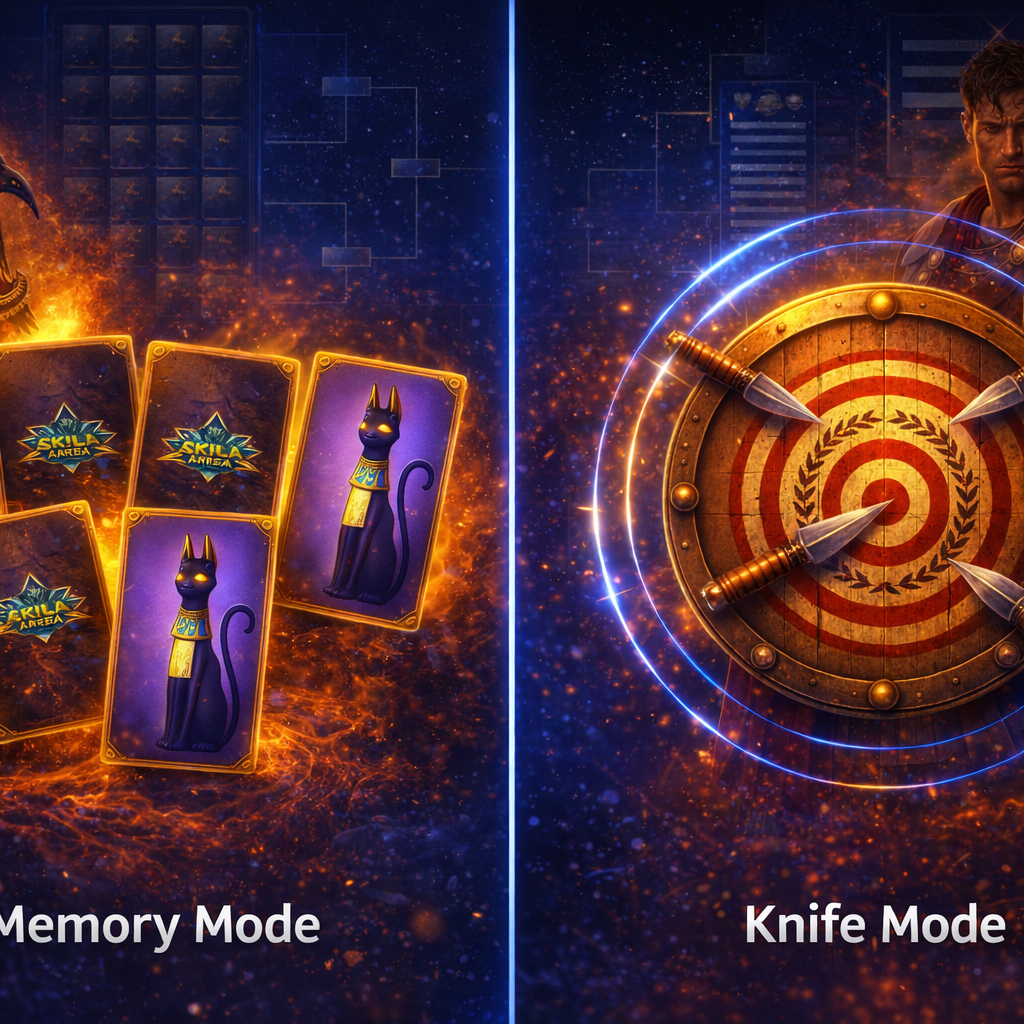
Memory Mode is one of multiple competitive experiences in Skill Arena. Here’s how it stacks up next to Knife Mode and a typical casual memory app:
| Experience | Core Skill | Timing Intensity | Round Length | Scoring Transparency | Competitive Format |
|---|---|---|---|---|---|
| Skill Arena Memory Mode | Pattern recall + spatial mapping | High during confirm phase | Short, replayable bursts | Clear: accuracy first, time second | Seeded, fair leaderboards |
| Skill Arena Knife Mode | Precision + rhythm | Very high, frame-by-frame | Short, tension-forward | Clear: hit quality + streaks | Tournaments with identical conditions |
| Typical Casual Memory App | Basic recall | Low to moderate | Variable, often ad-gated | Opaque or progression-based | Usually non-competitive |
If you enjoy logic under pressure, Memory Mode is a strategic counterweight to Knife Mode’s micro-precision. Many top players rotate between them to cross-train timing and focus. For a deeper look at Knife challenges, see the Knife Game Tournament Mode Deep Dive.
Tournament Flow: From Qualifier Runs to Leaderboard Pressure
Skill Arena’s tournaments are compact and fair. You’ll see posted rules, seed info, and scoring breakdowns before you tap start. Typical flow:
- Qualify: Submit one or more attempts within an event’s window.
- Optimize: Review where timing slipped and re-run with cleaner routes.
- Rank: Your best verified runs determine your final standing.
Because Memory Mode rounds are short, momentum matters. A strong first preview, smooth pairing, and confident confirmations will set a personal floor—then you climb. For more on event structures, check the Tournaments Guide.
Advanced Mechanics: The Small Edges That Win
At high ranks, details decide outcomes:
- Route planning: Sweep tiles in a stable pattern (e.g., left-to-right serpentine) to reduce cursor travel and decision time.
- Chunking: Convert 6–8 singles into 2–3 visual clusters. Pair colors, shapes, or position anchors.
- Pacing: Keep a steady cadence. Irregular tapping increases error probability.
- Error exits: If a mismatch is inevitable, bail early to limit penalties and reset fast.
- Breathing room: Micro-pauses before final confirmations often save more time than a rushed redo.
These micro-optimizations are why Memory Mode favors practice. It’s not about one lucky board—it’s about minimizing friction across attempts.
Trust and Fairness: What Keeps Competition Real
Skill Arena is built for real competition. Memory Mode follows the same fairness principles across the platform:
- Seeded parity: Players in the same bracket face matched boards and timing windows.
- Anti-cheat and verification: Suspicious runs are flagged, reviewed, and removed when appropriate.
- Device parity: Performance checks limit device advantages and maintain stable input timing.
- Transparent rules: Scoring and penalties are posted before you play.
If you want the full breakdown of platform integrity and event design, visit How Skill Arena Works and What Is Skill Arena?
Memory vs. Knife: Which Mode Builds Stronger Timing?
Both. Memory Mode builds deliberate timing—think “confirm with confidence.” Knife Mode builds reactive timing—think “hit the window perfectly.” Alternating between them strengthens focus and rhythm. To level up quickly:
- Warm up in Memory Mode to stabilize cadence and reduce decision fatigue.
- Switch to Knife Mode for precision pressure, then return to Memory Mode with sharper rhythm.
- Track your best runs and note where cadence breaks. Timing is a habit you can train.
For leaderboard perspective and prize structures across the platform, see Leaderboard Games With Prizes: Skill-First Competition.
FAQ: Memory Mode, Scoring, and Rewards
How are scores calculated in Skill Arena’s Memory Mode?
Your score is driven by accuracy first, then timing. Perfectly recalling pairs or sequences without errors earns the highest base. Faster confirmations and fewer resets improve tie-breakers and ranking in tournaments.
What determines rank in Memory Mode tournaments?
Rank combines your best qualifying runs, consistency across attempts, and time-based tie-breakers. Leaderboards prioritize accuracy, then time-to-complete, then penalties for misses.
Are memory game rewards in Skill Arena based on luck?
No. Outcomes are skill-based. Identical seeds and mirrored layouts keep conditions fair, so performance—not luck—decides who ranks higher.
How do gift card rewards work if I place high?
When a tournament lists gift card rewards, payouts follow posted rules. If you finish within the payout bracket, your reward is credited to your account for redemption according to the event’s terms.
Play Memory Mode like a pro
Master the preview, lock your route, and move with purpose. Memory Mode rewards clear thinking and precise timing—perfect for players who want a competitive edge on mobile. For a broader overview of the platform and its skill-first design, visit the Skill-Based Mobile Game Guide and Why Choose Skill Arena?
Download and compete
Ready to prove your memory under pressure? Join real competition and climb the leaderboard in Memory Mode. Download Skill Arena and enter your first tournament today.